When a customer's card expires and the renewal fails, the subscription gets cancelled. The customer didn't choose to leave. The payment infrastructure just couldn't handle a routine card lifecycle event.
This is involuntary churn. For subscription businesses, it's a direct source of lost revenue that has nothing to do with customer intent.
In this post, we’ll explain how payment orchestrations for subscription businesses can help reduce involuntary churn while creating a better customer experience.
Why subscription payments fail
Subscription billing faces failure points that one-time purchases don't. Two in particular drive the majority of involuntary churn.
1. Card expiry and processor-locked tokens
Cards expire, get lost, and get reissued by banks. Each of those events creates a failed renewal the customer may never notice. The subscriber is lost without any conscious cancellation.
It gets worse when the merchant's card tokens — which are the encrypted representations of card details stored for future use — are locked to a single processor's environment.
If a merchant stores tokens with one payment service provider (PSP), those tokens only work within that PSP's infrastructure. Routing a recurring charge to a different acquirer, whether for cost, performance, or an outage, means asking the customer to re-enter their card details. For a background subscription renewal, that almost always results in the customer not completing it.
As Primer's Christophe Smol explained, the lowest processing fees in the world are meaningless if the authorization rate drops as a result. Subscription merchants need to evaluate cost and conversion together.
2. 3DS re-authentication on retries
If a renewal fails with one processor and retries with another, processor-native 3DS forces the customer to authenticate again.
For a subscription renewal happening in the background, an unexpected 3DS challenge typically results in abandonment. The fallback technically retries the payment, but the customer drops off before it can complete.
How payment orchestration reduces involuntary churn
Involuntary churn happens when a recurring payment fails for reasons outside the customer’s control, such as an expired card, a processor decline, or a retry that triggers unnecessary authentication. A processor-agnostic payment setup gives you more ways to recover those payments without asking the customer to take action.
Since we’re writing this article, we’ll tell you about how this works with Primer:
- Network tokenization. Tokens issued through Visa or Mastercard at the network level update automatically when a card expires or is reissued. The renewal goes through without the customer doing anything.
- Processor-agnostic token vault. If your tokens are locked to one PSP, you can't route a renewal to a different acquirer without asking the customer to re-enter their details. A vault that stores tokens independently of any processor gives you routing flexibility for recurring payments.
- Primer 3DS on retries. If a renewal fails and retries with a different processor, the 3DS authentication result needs to carry across. Otherwise, the customer gets an unexpected authentication prompt on what should be a background renewal, and drops off. Because Primer 3DS is processor-agnostic, there’s no need for an additional authentication.
- Routing by transaction type. You should be able to route recurring transactions differently from customer-initiated ones. That means sending renewals to a processor with lower per-transaction fees while routing higher-value one-time purchases to a processor with stronger fraud tooling.
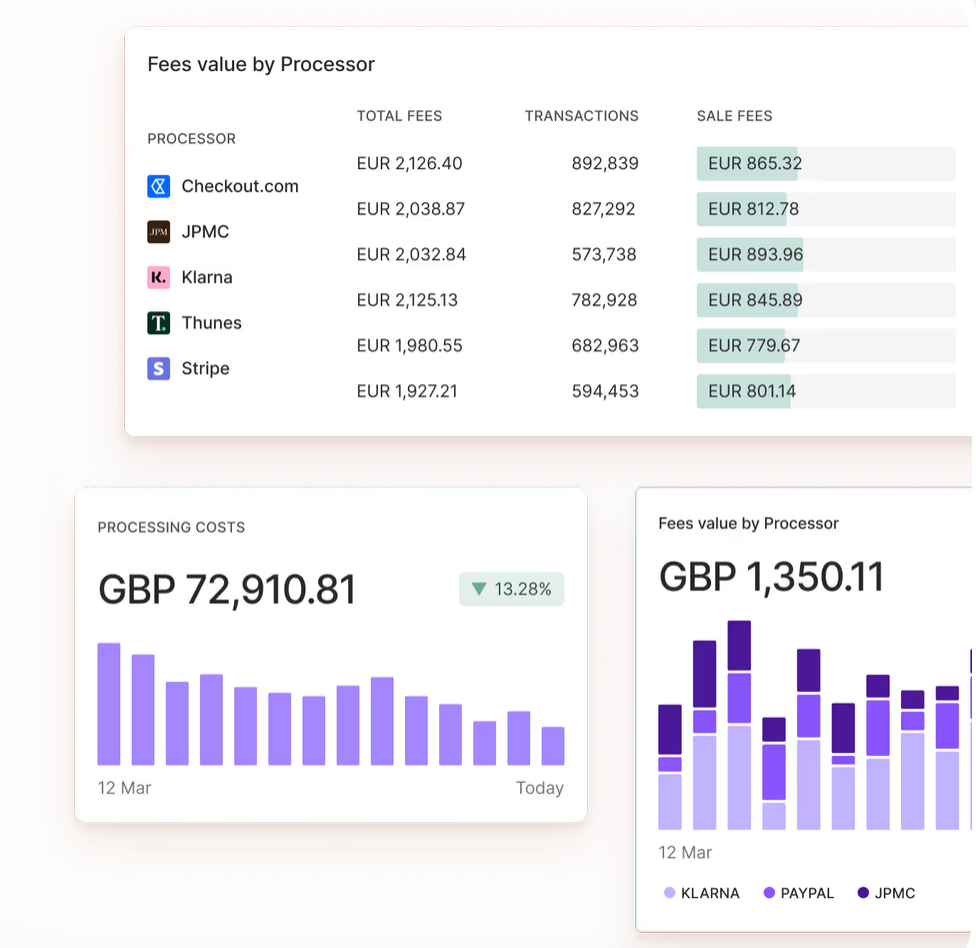
- Cost comparison across processors. Subscription businesses process high volumes of smaller transactions, so even marginal per-transaction fee differences can compound over a longer period of time. A clear comparison of processor costs in a single report makes it much easier to track and understand.
Learn more: How to reduce subscription payment failures and recover more revenue
Protect your recurring revenue with Primer
If you're losing subscribers to expired cards, unable to route recurring payments to a different acquirer because your tokens are locked to one PSP, or watching fallback retries fail because 3DS forces a second authentication, Primer addresses each of those.
Here’s how:
- Network tokenization keeps tokens current when cards expire, so renewals go through without customer action.
- The agnostic vault makes tokens portable across any connected processor, so routing decisions aren't locked to one PSP.
- Agnostic 3DS means retries don't trigger re-authentication, so fallbacks actually recover revenue instead of losing the customer to friction.
Book a demo to see how Primer handles network tokenization, token portability, and fallback recovery for subscription payment stacks.
Frequently asked questions (FAQs) about payment orchestration for subscription businesses
What's the difference between voluntary and involuntary churn?
Voluntary churn is when a customer actively cancels. Involuntary churn is when a subscription ends because of a payment failure the customer may never notice, like a card expiry, a processor decline, or a failed retry.
How does network tokenization prevent failed renewals?
Network tokens are issued by Visa or Mastercard and update automatically when a card expires or is reissued. The renewal uses the updated token without the customer doing anything, so the payment goes through even though the original card number is no longer valid.
Can you route recurring payments to a different processor than one-time purchases?
With the right orchestration platform, yes. Some platforms let you set routing rules by transaction type, so renewals go to a processor with lower per-transaction fees while customer-initiated purchases route to a processor with stronger fraud tooling.