We’ve always believed merchants should be in control of how their payments run, from which providers they use to how each payment is routed. Those choices affect how easily a business can enter a new market and how much it spends processing payments. But the complexity of running payments can leave teams spending more time managing them than improving performance.
That is the problem we have always wanted Primer to solve.
We’ve spent years connecting payment providers and bringing together data that would otherwise sit across fragmented systems. This gives teams a clearer view of performance and more control over how their payments run, while giving us the foundation to do more.
What comes next rests on three ideas. Payments infrastructure should be:
- Modular, so merchants can build the system they want and evolve it without starting again
- Connected, bringing every part of the payment journey and every partner into one system
- Intelligent, turning payment signals into better decisions and outcomes
At The Primer Showcase in London, we shared what that looks like in practice. Here's what we're building to make it happen.
Modular: Built around your business
Until now, getting started with Primer generally meant integrating Primer Checkout and using the payments engine behind it. That remains a natural starting point for merchants who want to bring their payments together.
Today, our customers route on average over 95% of their total payment volume through Primer. But we've also heard from businesses that want to use specific parts of Primer without changing the infrastructure they've already built. We're now making that possible with two new entry points.
Vault: The foundation, now standalone
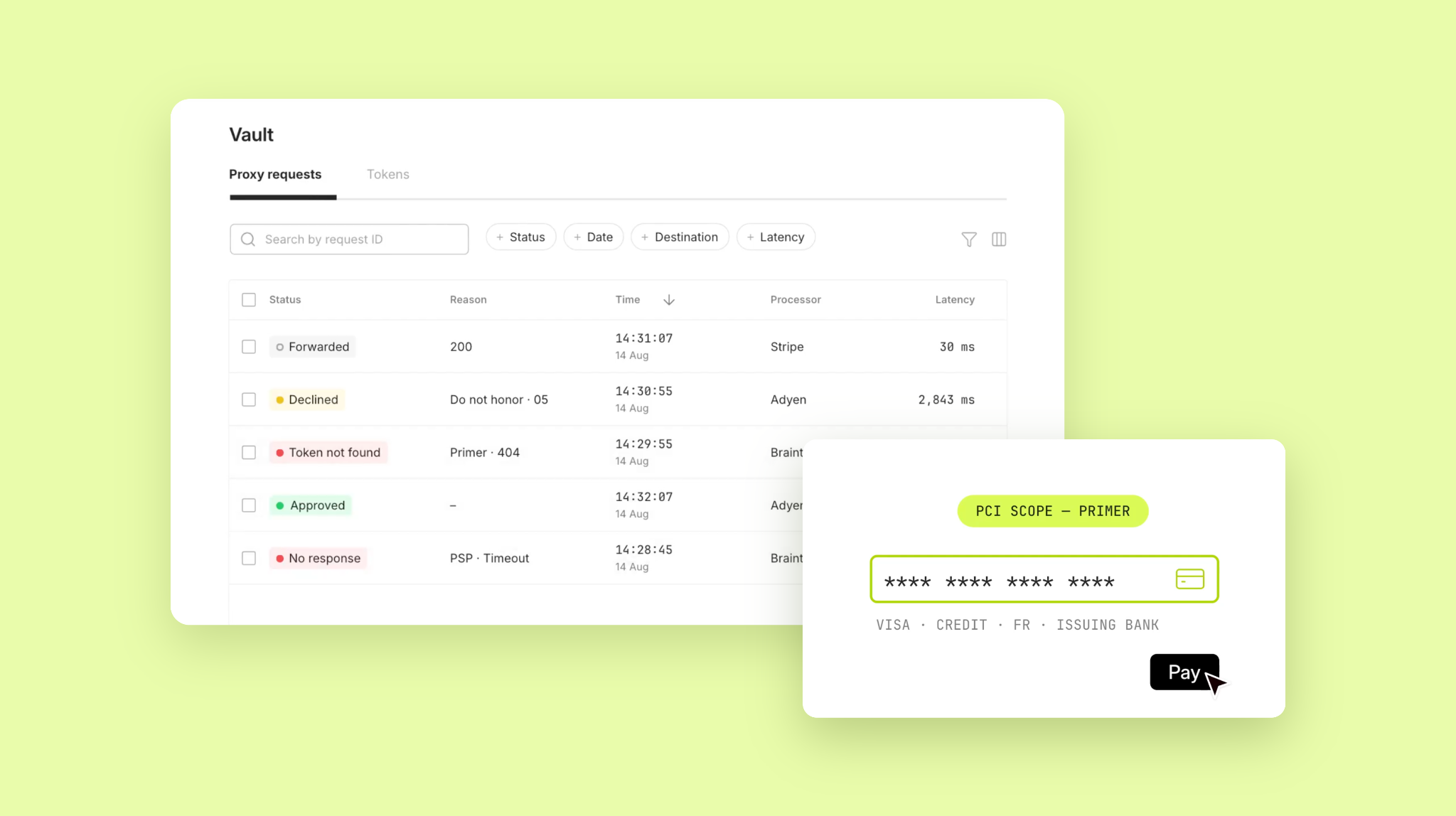
Every card payment processed through Primer already passes through our Vault, which securely collects, stores, and forwards payment credentials. That infrastructure already powers billions of dollars in payments every month. Now, we're making it available as a standalone capability.
Merchants can use our PCI Level 1-compliant Vault to tokenize and store payment credentials while keeping the processor integrations they've already built. Put simply, they can benefit from Primer's secure credential infrastructure without having to use our orchestration layer at all.
But if they want to explore our orchestration, they can choose which payments to route through Primer, test its performance on a portion of their traffic, and decide whether to move more payments onto the platform. How far they take it is entirely up to them.
Raw Card Data: Keep the checkout you've built
Some enterprises have spent years refining their checkout experiences. They have invested in PCI compliance, or built on top of another third-party vault, and built infrastructure around the needs of their business. We’ve heard it directly from businesses: How can we get value from Primer without needing to rip and replace everything?
With Raw Card Data, PCI Level 1 merchants, or third parties acting on their behalf, can securely send card details from their existing backend directly to Primer. There is no need to change the checkout they have already built.
From there, they can use Primer for routing, retries, Fallbacks, 3D Secure and more. They choose which traffic to send through Primer, and when: perhaps one new market, one payment flow or a portion of their volume.
That is what modularity means to us. It shouldn’t need to be all or nothing, as not every business is in a position to choose this path. Start with the capability you need, keep control of what you have built and expand without starting again.
Connected: Bringing the entire payment journey together
A payment does not exist in isolation. There is the journey that leads to it, the decisions that determine whether it succeeds, what happens when something goes wrong and where the money moves after settlement.
Much of that lifecycle still sits across different providers, dashboards and datasets. Merchants end up spending time piecing that information together, and even then, they don't always get the full picture.
That’s why we’re extending Primer across more of the payment lifecycle, connecting customer behavior, payment performance, financial outcomes and money movement in one system. That connected view begins before a payment is even made.
Checkout Conversion: See what happens before Pay
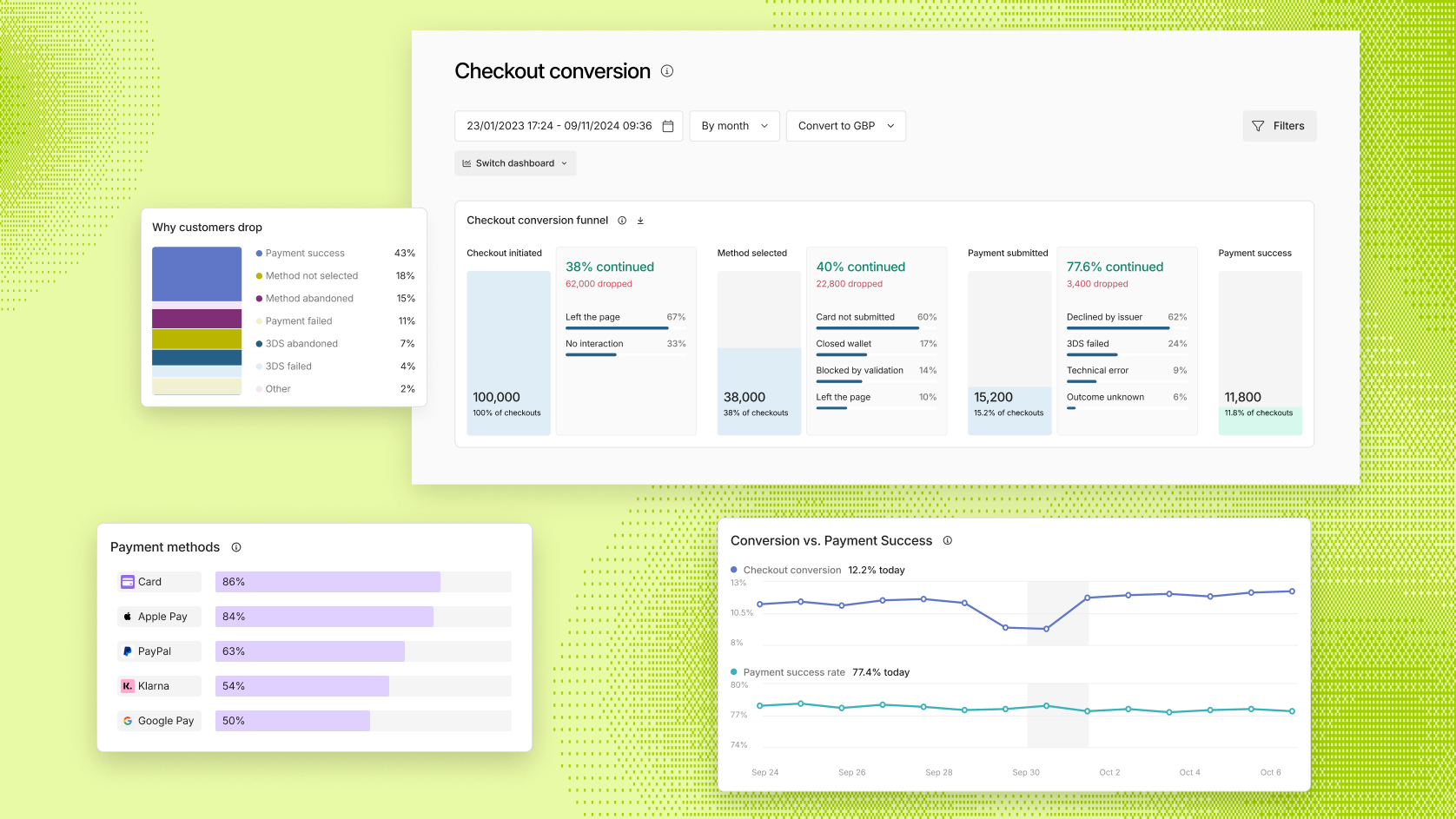
Merchants already use Primer to experiment with payment performance and costs. But there's another source of lost revenue that's harder to see. Around 70% of online shopping carts are abandoned before purchase. When a customer leaves the checkout before pressing “Pay”, there is no transaction for payments teams to investigate.
Primer now surfaces checkout conversion insights, giving merchants visibility across the full checkout funnel. Payments teams can see where customers abandon the journey and compare conversion by payment method, market, device and more. Alongside payment success data, that view can reveal problems that authorization rates miss entirely.
But that visibility is only valuable if you can do something with it. With Primer Checkout, merchants can test and update their checkout experience quickly, without lengthy development cycles.
We’ve never believed payments should be a black box. Teams should be able to find problems, make changes and see whether those changes work.
Dispute Management: Bring the full story together
The outcome of a payment is part of its story too. A transaction may settle successfully and become a dispute weeks later.
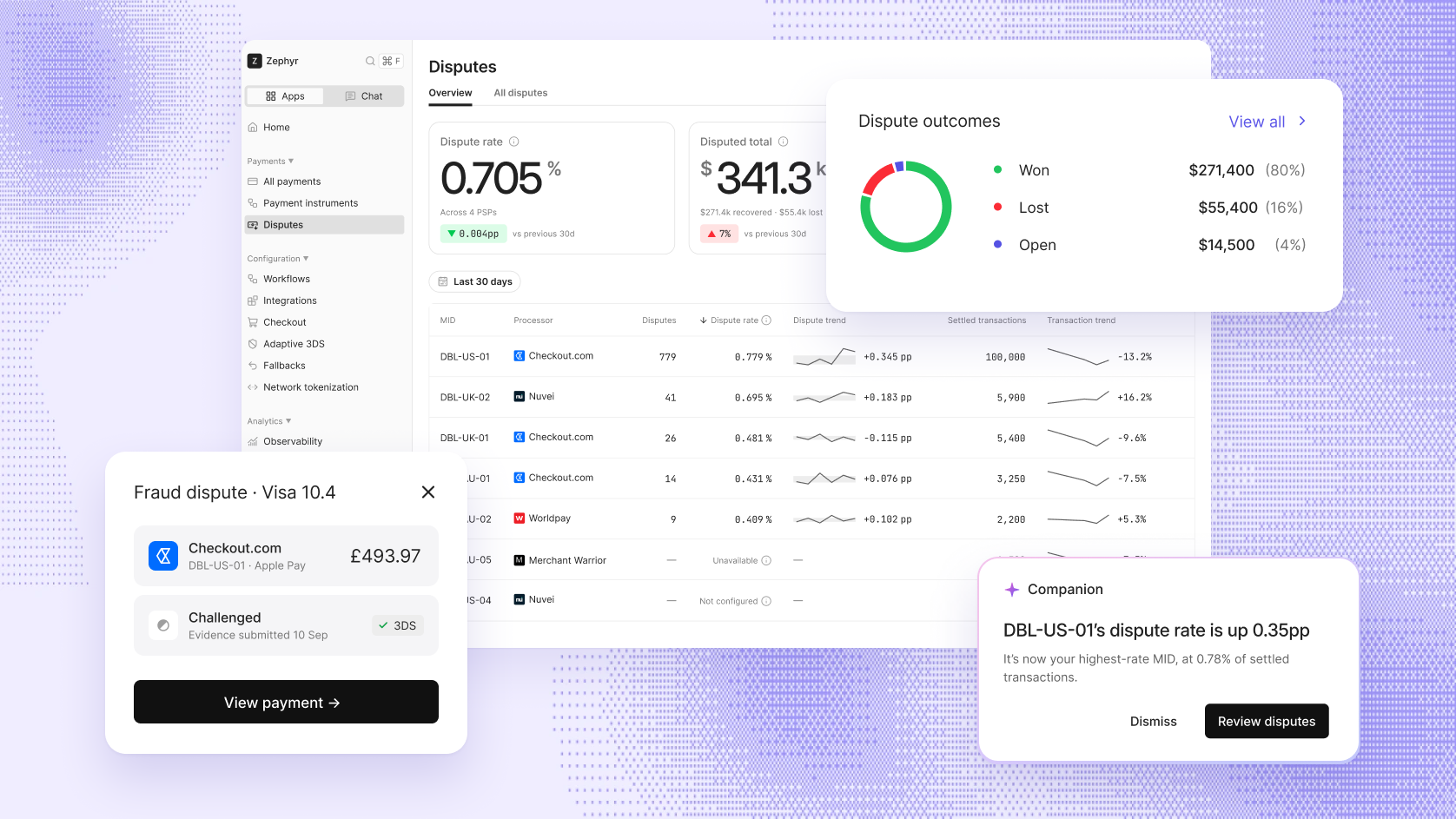
Managing disputes across multiple processors remains surprisingly manual. Each provider has different terminology, stages and deadlines. The evidence needed to respond may sit across customer support tools, backend systems, fraud platforms and logistics partners. Meanwhile, the original payment history lives somewhere else again.
At scale, that work adds up quickly. One merchant we spoke to handles 6,000 disputes a month. At 30 minutes for every case it chooses to fight, that represents roughly 3,000 hours of work, every month.
With Dispute Management, we're bringing disputes into Primer and linking them directly to their original payments. Your teams can see what needs attention, identify opportunities to intervene before issues become chargebacks, and manage responses in one place.
Because Primer already sits in the payment flow, we can connect the details needed to investigate what happened.
Partners: Expanding the ecosystem
Since we launched Primer for Patners, providers have been building more than four integrations every week through our no-code interface. That momentum is removing a major technical barrier to adding new providers, allowing merchants to focus on which partnerships make the most commercial sense for their business. But the opportunity goes beyond adding more integrations. Through strategic partnerships, we’re working directly with leading providers to connect capabilities that have traditionally lived in separate systems—and make them accessible through Primer.
At The Primer Showcase, we highlighted Stripe Link and Revolut Pay to expand checkout options, alongside EBANX, PayerMax and Razorpay to broaden payment acceptance across more markets, including North America, Greater China, Japan, South Korea and India, with access to local payment methods such as UPI.
With Stripe Billing and Sphere, we're also extending our ecosystem into billing and tax, bringing these services closer to the payments infrastructure businesses already rely on.
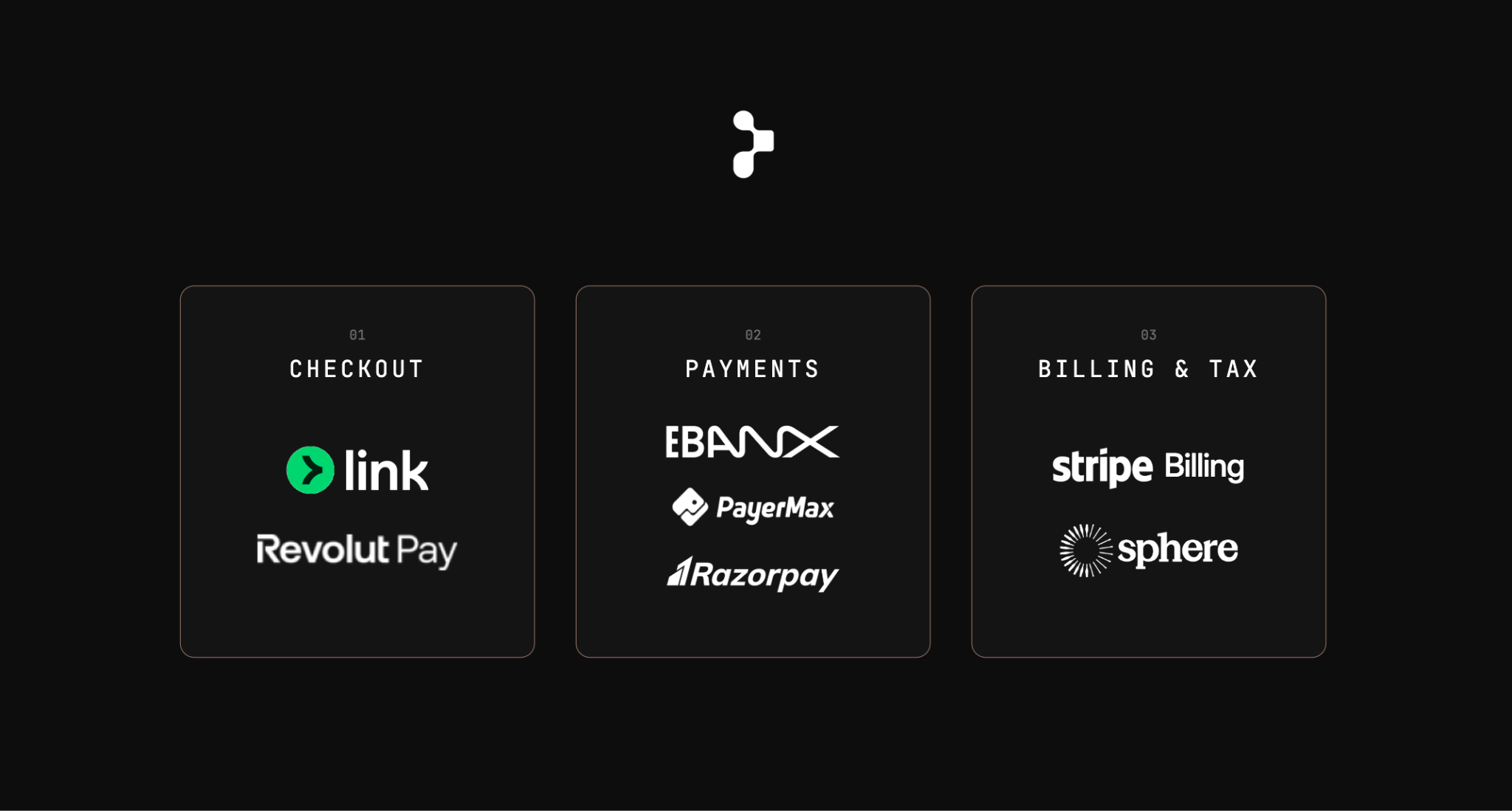
Our ambition is to make Primer the app store for payments. One connected platform where partners can make their capabilities available and merchants can access them without having to build and maintain every integration themselves. Bringing those services together creates new opportunities for merchants to improve performance and get more value from their payments.
Intelligent: Putting signals to work
Every payment creates signals. Every authorization, decline and routing decision tells us something about cost and performance. Primer captures more than 400 data points per transaction, creating a connected view across providers and outcomes that is difficult to build from fragmented systems.
But having the data doesn't mean knowing what to do with it. Finding a useful pattern can take days of analysis, even for a seemingly simple question. And once teams find an answer, they still have to decide what to change.
That doesn't mean handing every decision over to an LLM. These models are non-deterministic, and relying on them for payment decisions at scale introduces both uncertainty and significant costs. We need to be deliberate about where we apply AI, using it to help teams understand their data, and improve the decisions they make.
Payments teams should not have to choose between understanding what is happening today and building what the business needs tomorrow.
We have two AI products designed to close that gap:
- Companion helps teams understand and act on signals
- Autopilot uses payment outcomes to improve decisions autonomously
Companion: Your 24/7 payments analyst
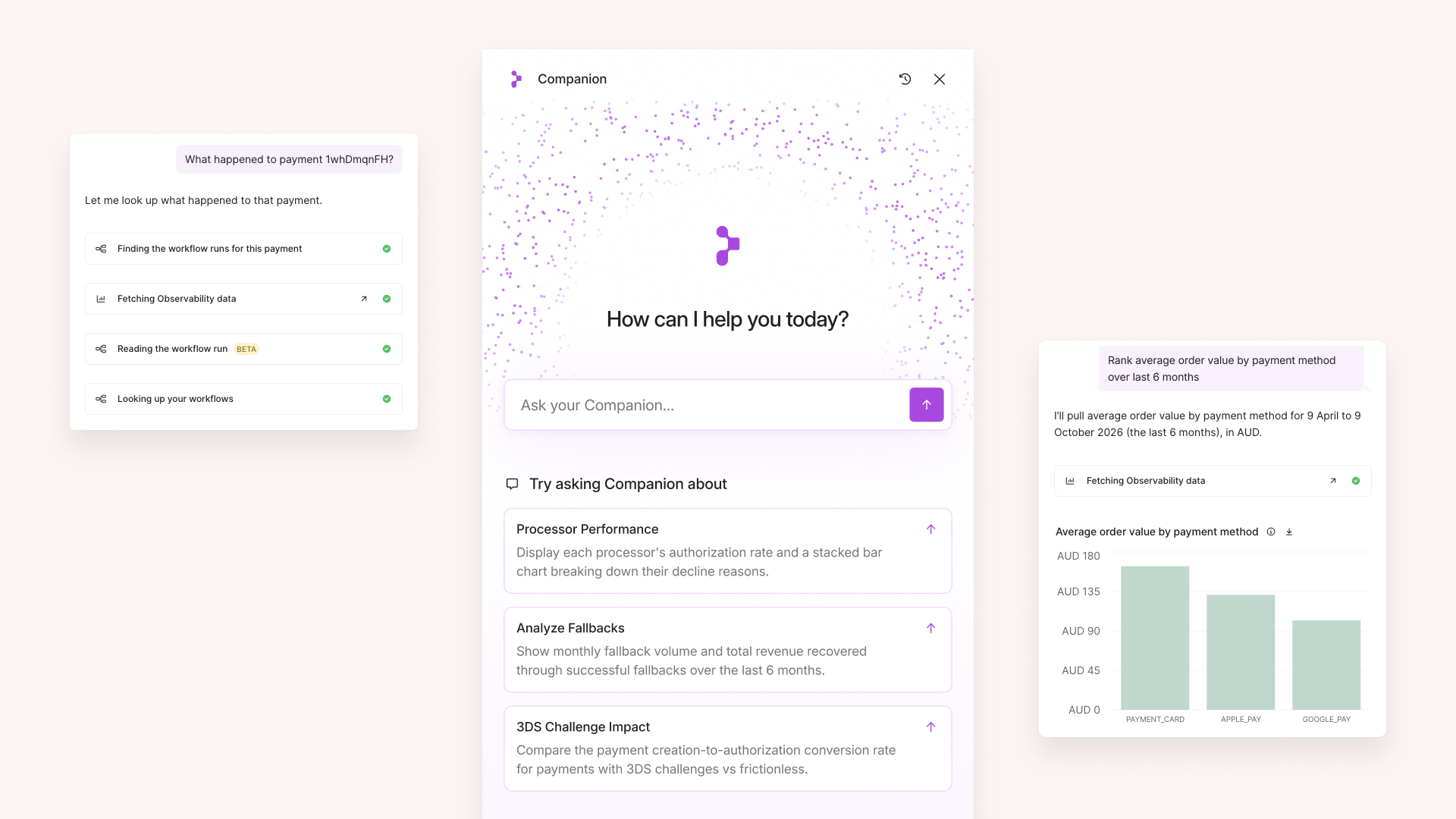
When we launched Companion a year ago, we wanted to make it easier for teams to get answers from their payments data without spending hours digging through dashboards. To become a trusted analyst.
Fast forward to today, one in two merchants on Primer use Companion weekly, and on average three sessions a week. We’ve already seen the impact. When Airalo spotted suspicious payment activity, its team used Companion to investigate the pattern and take targeted action within 20 minutes.
A year of merchants using Companion has made the next step clear. It should understand what a team is working on, bring forward the right context and take recurring analysis off their plate.
Companion now understands which page and data a merchant is viewing, so it can answer questions in context and recommend what to investigate next. It can query data from across Primer, including individual payment histories, disputes and PSP costs. And teams can ask it to generate a report on a specific date or schedule analysis to run regularly.
Over time, we want Companion to become more than a tool that responds. We’re working toward letting merchants ask Companion to make changes to their payment configurations, including Workflows, which they can review and approve before anything goes live. This brings us closer to our vision of Companion as a proactive teammate for payment leaders.
Autopilot: Optimization that keeps learning
Companion helps payments teams understand performance. With Autopilot, we’re tackling the continuous work of improving the decisions behind it.
Routing strategies are difficult to keep effective. Processor performance varies by issuer, market and transaction type, and conditions keep changing. Continually testing and adjusting rules takes considerable time, and experimentation comes with a cost of its own. Testing a new strategy means directing some payment traffic through an approach that might perform worse than the one already in place.
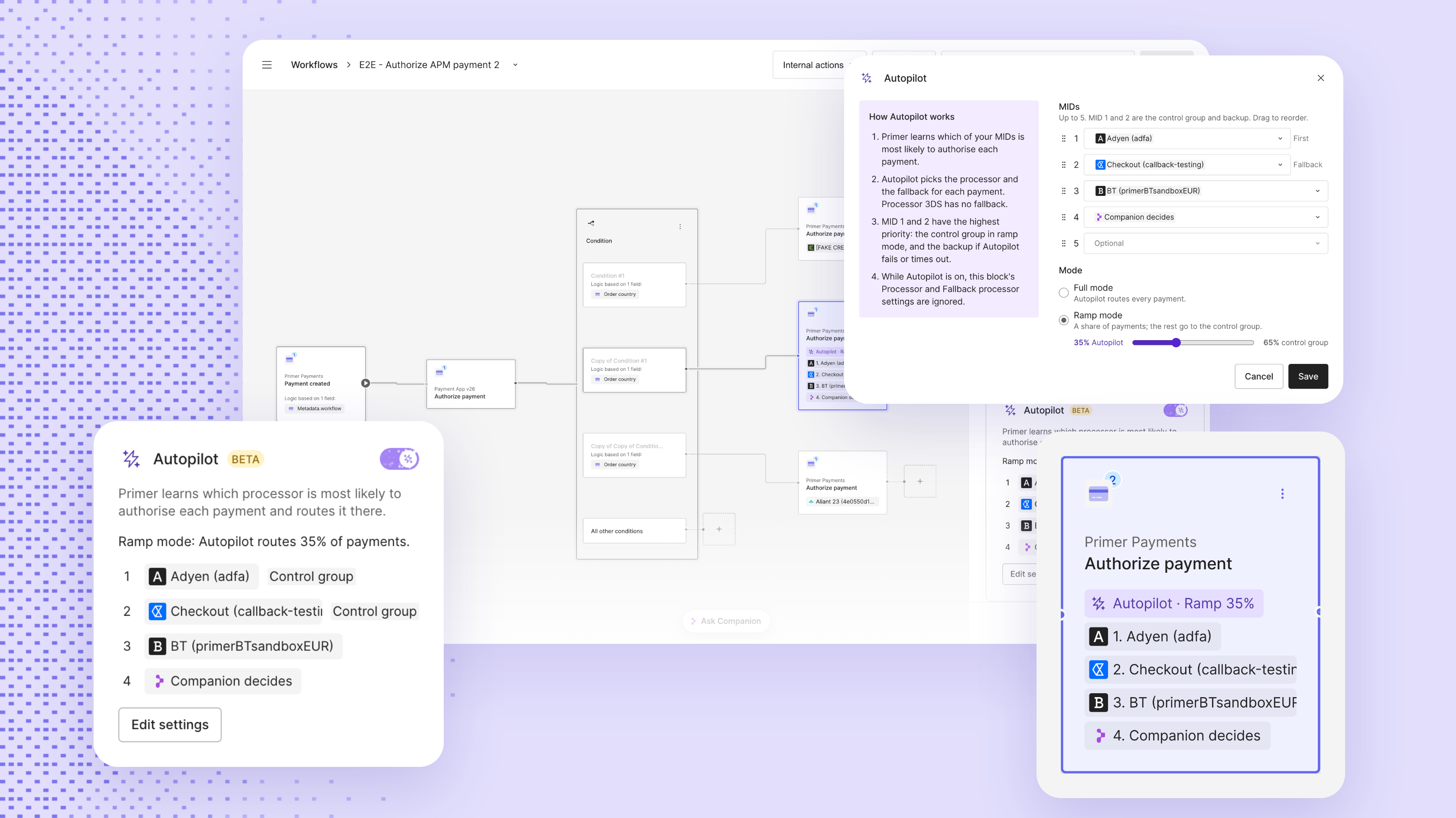
Autopilot applies machine learning within the payment flow. It learns from historical performance, observes the outcome of each decision, and uses that information to improve the next one.
Autopilot is live on Primer today, and has already made millions of live payment decisions. We first tested this approach when choosing whether to send a network token or primary account number to a processor. Across merchants with different traffic profiles, we saw authorization rates improve by up to three percentage points.
That's the impact of optimizing just one decision in the payment flow. We’re now applying the same approach to processor selection.
Merchants choose the objective, such as improving authorization rates or reducing costs, and define the commercial and operational guardrails. Autopilot optimizes within those limits, while Companion helps teams understand what changed and why.
These use cases are just the beginning. Over time, Autopilot will support more decisions across the payment lifecycle, so teams can set the strategy without making every adjustment themselves.
A roadmap that makes more possible
I don’t think a payments platform is ever finished, because the businesses using it aren't standing still. A change that improves authorization rates or reduces processing costs can make a meaningful difference across millions of transactions. And when businesses can keep finding and acting on those opportunities, the advantage builds over time.
We want more merchants to have that advantage, regardless of how they choose to build with Primer. They should be able to access the capabilities they need without replacing what already works, connect more of the payment journey to uncover opportunities they couldn't see before, and use intelligence to act on those opportunities without adding to their team's workload.
But what I do know is that whatever comes next for how businesses operate, one thing remains constant. They still need to get paid. I hope our merchants keep challenging us to make that part of their business work harder for them. Their ambitions will push us to think differently and help shape what we build next.
Ultimately, the measure of our success isn’t how many products we launch, but how much more we make possible for the businesses using them.